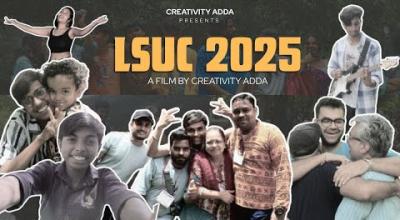
LSUC2025 Coimbatore
Check out the Learning Societies Unconference 2025 held in Coimbatore. This is the premier event for the alternative education movement in India.

While all of these different terms—nonformal education, community education, popular education, and social movement learning—have their value, we choose to speak here of radical education done in grassroots contexts as the frame for this book. By this, we refer to radical education that is done largely outside the formal education system of schools and universities; and that is concerned with engaging frontline workers, street-level organizers and activists, locally embedded leaders, and individuals and groups who are directly impacted by the social problems and issues being addressed in any educational project. Grassroots is a term that is recognizable to and often used by the participants in this kind of education. It is also a term that one finds used regularly and loosely in academic literature on such forms of education. Grassroots education, for example, has been used to refer to Zapatista autonomous education in Mexico (Maldonaldo-Villalpando et al. 2022), a Freireian-inspired university working with waste pickers and the educational initiatives of the Landless Workers’ Movement in Brazil (Gutberlet and Vallin 2024; Tarlau 2015), and indigenous educational activism opposing oil pipeline expansion at Standing Rock in North Dakota, USA (Roumell 2018).
Radical education in grassroots contexts includes but extends beyond Freireian and other Latin American traditions of popular education, as well as social movement learning. By speaking clearly about radical approaches to education in these contexts, we recognize that many types of nonformal, community, or grassroots education are not radical at all, whether in their intent, practice, organization, or outcome. While radical education, as noted earlier, is often constrained by the structural, political, and cultural logics of formal education, this does not mean that all forms of nonformal or community or grassroots education are inherently liberating, empowering, or indeed, radical. Such spaces may, in some times and places, provide freedom and opportunity to carry out sustained and effective radical education projects that are often difficult to carve out in school and university settings; but they can also present similar, or new and different sets of problems to those often found in formal education. Part of the aim of this book, then, is to try to listen and learn from those who have been seeking to develop radical education projects in grassroots contexts to understand the nature and form of this education, and the opportunities and limitations that may be created by the out-of-school contexts in which they work.
Featuring many friends including: Munir Fasheh, Gustavo Esteva, Coumba Toure, Manish Jain.
LINK HERE for FREE E-COPY TO BOOK